
Fix App Restrictions on SevaSindhu Devices from the Portal
The SevaSindhu program has made digital learning accessible to many students and individuals by providing tablets and other devices. These devices are specially configured to be safe and suitable for educational purposes, which is why app restrictions are often in place. While these restrictions help protect the device, they can sometimes block useful apps, limit access to certain features, or make it harder for users to install apps they need for learning.
If you’re facing issues with app restrictions on your SevaSindhu tablet, don’t worry! In this guide, we’ll show you step-by-step how to fix app restrictions, remove unwanted blocks, and get the apps you need working properly on your device. Whether you are a student, parent, or teacher, this easy-to-follow guide will help you get back to learning without unnecessary delays.
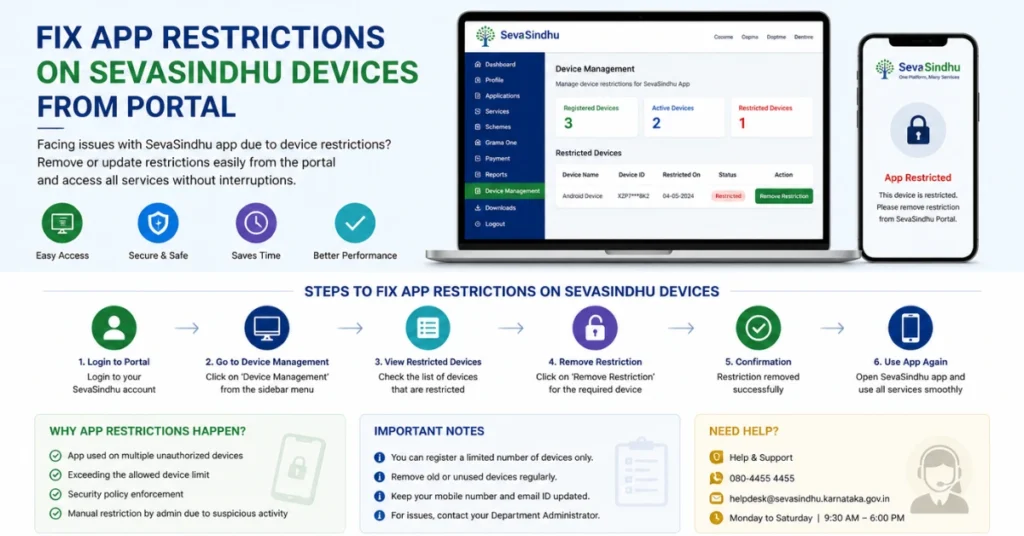
What Are App Restrictions on SevaSindhu Devices?
App restrictions are rules or settings that limit what apps can be downloaded, installed, or accessed on a device. These restrictions are often put in place to ensure the tablet is used only for its intended educational purposes. For example, schools or educational institutions may block non-educational apps, gaming apps, or restrict certain settings to keep the device focused on learning activities.
While restrictions serve to protect users and keep the device secure, they can sometimes be too tight, preventing the installation of useful apps. If you’re encountering issues with app access, here are some reasons it may be happening:
Blocked access to certain apps (e.g., social media, gaming apps, etc.).
Restricted permissions for apps that need access to features like camera, location, or storage.
Blocked installations of third-party apps or those not found in the Google Play Store.
Settings restrictions prevent changes to Wi-Fi, device settings, or app features.
Common Reasons for App Restrictions on SevaSindhu Devices
Understanding why restrictions are in place can help you better navigate the system and solve the issue. Here are the most common reasons for app restrictions on SevaSindhu devices:
Pre-configured Device Settings
SevaSindhu devices are often pre-configured by administrators (like schools or institutions) to restrict certain apps. These settings help keep students focused on educational content and reduce distractions from apps that aren’t essential for learning.
Device Security and Safety
For students and young users, app restrictions are important for security. Devices might block harmful apps or apps that may consume excessive data or are inappropriate for educational purposes.
Parental Controls
If you’re using the tablet in a household setting, parental controls might be enabled. These controls are meant to restrict access to non-educational content, especially for younger children. However, these settings can also block useful apps.
Network or Wi-Fi Restrictions
Some devices are set up to restrict internet access based on network policies. If your SevaSindhu device is connected to a specific Wi-Fi network or institutional server, it might be set to only allow access to certain types of apps or services.
Device Management System (MDM) Restrictions
Many SevaSindhu tablets are enrolled in a Mobile Device Management (MDM) system used by schools or organizations to control the apps that can be downloaded. These restrictions are typically set by an administrator and are meant to ensure that only approved apps are installed.
How to Fix App Restrictions
If your SevaSindhu device is giving you trouble with app restrictions, here are the steps you can take to fix the issue and get your apps working.
Check the Device’s Settings for Restrictions
Start by checking your device’s settings to see if any restrictions are already set.
If the app needs permission to access certain device features, enabling these permissions should resolve the issue.
Use Google Play Store to Check for App Restrictions
If the device is restricting the installation of apps, follow these steps to manage Google Play Store settings:
Open the Google Play Store on your device.
Go to Settings (tap the profile icon in the top right corner).
Scroll down to Parental controls and see if they are enabled.
If parental controls are on, you will need to disable them or adjust the settings to allow certain apps.
Make sure that your Google Play settings allow you to download all necessary apps for educational purposes.
Check for Device Restrictions in MDM Settings
If your SevaSindhu device is managed by an administrator (such as a school or institution), you may have restrictions set through MDM (Mobile Device Management). If this is the case:
Contact your school’s IT department or SevaSindhu support to ask about any restrictions that might have been applied to your device.
Ask them to review the list of allowed apps and request changes if you need additional apps for educational purposes.
MDM restrictions are typically applied remotely, so the IT department can update the settings on their end.
Disable or Adjust Parental Controls
If you or a guardian has enabled parental controls on the tablet, this could restrict app access. To modify these settings:
Go to Settings → Digital Wellbeing & Parental Controls.
If Parental Controls are enabled, you’ll need to enter the PIN or password to modify settings.
From here, you can either disable parental controls or adjust the restrictions to allow access to the apps you need.
For devices set up for children or family use, this is a common fix to restore access to apps.
Perform a Device Reset (If Necessary)
If you’ve tried everything above and the restrictions are still blocking access to apps, you may need to consider a factory reset of the device. Keep in mind that this will erase all your apps, settings, and data, so it should be used as a last resort.
Steps for Factory Reset:
Back up important data like files, apps, or photos.
Go to Settings → System → Reset options.
Select Factory data reset.
Confirm and follow the prompts to reset the device.
Once reset, you can reinstall apps and configure the device settings.
Use a Third-Party App Manager (If Applicable)
In some cases, especially for more advanced users, you can use third-party app managers to bypass restrictions. These are especially useful for managing apps that aren’t available on the Play Store. However, be cautious with this method, as it may expose your device to risks if the apps aren’t from trusted sources. You can also read: Prevent OTP Delay for Seva Sindhu e-KYC — Simple Solutions
Popular third-party managers:
APKPure: This allows you to download apps directly and can sometimes bypass restrictions.
App Manager: You can use this app to manage installed apps and permissions.
How to Prevent App Restrictions from Being Applied in the Future
Here are some tips to ensure that your SevaSindhu tablet doesn’t face app restrictions again:
Review and Adjust Parental Controls Regularly
Make sure that parental controls and screen time limits are set to your preferences and aren’t too restrictive.
Use Google Family Link for App Management
Google Family Link is a great tool for managing apps and permissions, especially for kids. It allows you to approve or block apps remotely.
Regularly Check Device Settings
Periodically check your device settings for updates or restrictions that might be set accidentally. This ensures that your device remains unrestricted for educational use.
FAQs
Final Words
Dealing with app restrictions on your SevaSindhu device can be a little frustrating, but the good news is that the solutions are simple. Whether the issue is caused by Google Play settings, parental controls, or MDM restrictions, following these steps will help you regain access to the apps you need for educational purposes.
Take control of your device by adjusting settings, contacting support if needed, and ensuring that future restrictions don’t block your essential apps.


